Chasing Mailboxes lays down the law for the Coffeneuring Challenge 2023. The challenge is straightforward (ride your bike and drink coffee seven times in seven weeks) but in keeping with the grand tradition of randonneuring established by Audax Club Parisien, there is an elaborate set of rules, some honoured more in the breach than the observance.

Burning Ambulance runs down the oeuvre of Hedvig Mollestad. I only know Black Stabat Mater (and fully endorse Phil’s praise) but this video of Ekhidna covering “Red” convinces me that I need to dig deeper.

Tone Glow top their hefty A.R. Kane interview with an even chunkier one with Hal Hartley. Last year I rewatched the video shop classics of my youth — The Unbelievable Truth, Trust, Simple Men, and Amateur — and they still hold up for me. Judging from the interview, I have a lot of catching up to do.

Up Home!

“When you grow up in the East End of London in the 1970s, you wanna believe in evolution, I’m telling you. You don’t wanna believe that this is the end game.”

Hefty interview with Rudy Tambala of A.R. Kane over at Tone Glow.

I’ve listened to the Up Home! EP a few times in recent weeks, A.R. Kane on my mind since the review of the box set in the Wire. Filleted from the Complete Singles Collection, the EP sounds more striking than ever, almost incomprehensibly accomplished for a band only on their third single, and a quantum leap on from their debut, “When You’re Sad”. The lacerating distortion, the cavernous dub spaciousness, the rough sutures between the musical ideas left defiantly exposed…even in the febrile milieu of early UK post-rock, there weren’t many bands who sounded so individual, so unexpected. Maybe My Bloody Valentine (the jagged stop-start noise of Isn’t Anything more than the amniotic wash of Loveless) or Disco Inferno. It surprises me that several times in the interview Rudy mentions Slowdive, who I always thought of as being irremediably obvious and plodding, but perhaps I underrate them.

Elsewhere:

Keith Leblanc (Tackhead, Sugarhill Gang etc.) talks to Burning Ambulance.

Aquarium Drunkard explores guitar/drum duos, talking to Steve Gunn, Jim White, and Rick Brown of 75 Dollar Bill (who played two transcendental sets at the Workman’s Cellar last Saturday).


Conference of the Birds (1973)

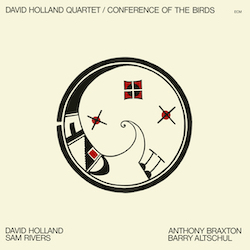
Conference of the Birds album coverJazz will, I suspect, ever remain an unknown continent for me. I bought my first jazz album, one of those low-rent I Love Jazz compilations, when I was too young to drink. I’ve picked away at the music over the thirty-five years since but my knowledge remains only fingernail deep. In the end, I just don’t find the head-solo-chorus jams that are the meat-and-potatoes of jazz that compelling. I struggle to discern the nuances of individual style — I could number the players (mostly pianists) that I can reliably recognise on the fingers of one hand. My favourite recordings run to more developed arrangements, or collective improvisation (better yet, both at the same time…Charles Mingus often delivers here).

Conference of the Birds is a heavyweight session, but of the four players, I’m familiar only with Dave Holland, from his brief tenure with Miles Davis. I’ve never heard a note by Sam Rivers (despite his even briefer tenure with Miles), nor Anthony Braxton, though both are major figures in the avant-garde. Barry Altschul is no more than a name. The generally reliable Penguin Guide to Jazz Recordings gives it Core Collection status, rating it a “quiet masterpiece”. That the last edition of the Guide came out in 2008 gives a fair idea of how long I’ve been intending to listen to this album.

Despite the free-playing credentials of the four musicians, Conference of the Birds charges out of the gate with “Four Winds”, a track that sounds almost nostalgic for the bebop era, Altschul laying down a high-tempo cymbal pulse while the horns chase each other. The solos stray a bit too far into goose-throttling territory to have been tolerated at Minton’s but the spirit is there. Three of the six tracks follow that template. Two take a more conversational approach, forgoing steady drum rhythm and long horn lines to open up a space into which the four musicians interject brief phrases. The second and shorter of these, “Now Here (Nowhere)” gradually builds to a perfectly balanced, suspended shimmer. Were it not for the title track, it would be the highlight of the album.

But “Conference of the Birds” is a thing apart. It opens with a meditative bass solo from Holland, before he strums a few chords (sounding implausibly like a Nirvana riff) to announce the main theme. As he picks out the melody, flute and saxophone twine around each other, rising into the air. As the theme repeats, Altschul moves from hand percussion to cymbals to marimba. Inspired, apparently, by the sounds of the dawn chorus outside Holland’s London flat, the melody seems to reach centuries back in time. It’s like little else I’ve heard in jazz — maybe Coltrane’s version of “Greensleeves” from Africa/Brass is a second cousin — and I wonder if Holland had perhaps been listening to some of the jazz-adjacent UK folk bands like Pentangle? Either way, it’s a limpid, spellbinding piece of music that immediately reminds you that this is, after all, an ECM album.

This post is the second in an occasional series, in which I’m working through the span of life, picking an album (and, preferably, artist) new to me for each year of my life. Previous posts.

Fruit Market

Drastic Season by African Head Charge

Of course, if we’re talking about post-punk dub, it’s impossible to look past Adrian Sherwood and On-U Sound. African Head Charge are also on the bill for Le Guess Who—no indication whether Sherwood will be manning the sound desk but you never know.

It’s probably too much to hope that they’ll play anything from their third album, Drastic Season, released a full forty years ago now. I’m no On-U Sound expert, but this goes as far out as anything I’ve heard, the entire sound-field yawing and warping as Sherwood works the faders. “Fruit Market” is perhaps the easiest track on the album to parse, the horn refrain acting as a guiding light through the chaos, but it’s still head-melting stuff.

Bonus track: Bonjo Iyabinghi Noah and Adrian Sherwood pick ten Head Charge classics for the Quietus.

Susuro

Deliverance And Spiritual Warfare by Holy Tongue

The curators and initial line-up for Le Guess Who were announced a few weeks ago…time to do some homework. Valentina Magaletti looks to be the Zelig of the 2023 edition — I count at least three of her projects on the bill (Holy Tongue, Moin, and a duo with Marta Salogni).

I already had my eye on the Holy Tongue album after a glowing write-up from Phil Freeman (Burning Ambulance, the Wire). As he says, you could slip most of the album into a post-punk dub DJ set without anyone blinking an eye, but more than Public Image Ltd. or African Head Charge, “Susuro” reminds me of Can circa Ege Bamyasi, or prime Mouse on Mars. A shoe-in if Kevin Martin ever resurrects the Macro Dub Infection compilation series!

From Centre to Wave

The original incarnation of Loop endured for a scant five years at the tail end of the eighties, achieving their moment of aesthetic perfection with A Gilded Eternity and the “Arc-Lite” single, then splitting. Over the course of three albums, they pared away the extraneous, cutting out the crawling wah-wah guitar solos to leave only riffs like pulsar transmissions. No harmonic development, just drilling, distortion-drenched guitar riffs repeated over circling, tom-heavy rhythms. I can think of few other bands with the same commitment to repetition, to this kind of formal purity — Lungfish, maybe, or Wire in their terse, abrasive early days. Absent the consolations of Spacemen 3’s religiosity, A Gilded Eternity evoked a bleak, post-industrial landscape, blackened and smoke-wreathed.

After the split, Robert Hampson briefly joined Godflesh, playing on half of their third album, Pure (itself a monolithic aesthetic statement), before forming Main, with Loop’s other guitarist, Scott Dawson. Main continued the programme of reduction, quickly dispensing with drums, ultimately with guitars (and Dawson), the music so rarefied and abstracted that Main seemed to vanish into the ether, presence slipping imperceptibly into absence. It’s surprising that the last Main album appeared as late as 2013, less surprising that it appeared on Peter Rehberg’s Editions Mego label, a distance remove from rock and its mythologies. I believe Hampson spent a while leading a hand-to-mouth existence in Paris, working on electro-acoustic composition at GRM.

The return of Loop has been slow and faltering, bursts of activity separated by long periods of silence. A comprehensive reissue campaign around 2008, comprising the three albums with attendant radio sessions and demos, and the three-CD set rounding up non-album tracks. A triumphant headline set at All Tomorrow’s Parties in 2013 that recalled the thrill of the very first gigs I went to as a teenager: Sonic Youth, the Shamen, Dinosaur Jr., My Bloody Valentine, Fugazi…Loop. That all signals jammed feeling, complete sensory overload: the thick fog of dry ice and staccato glare of strobe lights, the brain-capsizing volume and distortion, the suffocating crush of bodies yearning to be closer to the stage. A new EP in 2015, Array 1, notionally the first of a trilogy that was never completed, derailed perhaps by the collapse of the ATP organisation. Scattered live appearances — I caught a lacklustre night at Le Poisson Rouge in New York. In 2022 a new album, Sonancy, released incongruously on Cooking Vinyl, a label linked indelibly in my mind with Michelle Shocked and the Cowboy Junkies. Momentum again halted, this time by Covid, postponing the accompanying tour.

Postponed until last Saturday, at Whelan’s. The usual apprehension about seeing a band you love, long after the fact, the fear of seeing something dismal, embarrassing, that might sour you on them forever. I’m not convinced by Sonancy, the sound too clean, too precise, too light. I’m don’t know whether Loop would welcome the comparison, but it stands in the same relation to A Gilded Eternity as Hawkwind’s late-seventies albums do to Doremi Fasol Latido. Recognisably the same band but lacking the thickness, the heft, that steely-eyed gaze into the infinite.

Sonancy by Loop

The venue was half-empty when I arrived, knots of greying men checking each other’s credentials, seeing who was at the gig in McGonagle’s in 1991. Robert invoked the thirty-two year gap since their last visit to Ireland many times throughout the evening. More subtly, the EU flag draped over his amplifier sported only twelve stars, as it did back then. They played a long set, an hour and forty-five minutes — this tour the last run for the older material, he warned. And it was terrific, not a moment too long. The rhythm section (Wayne Maskell and Hugo Morgan from the Heads) were locked in, the guitars were shearing and relentless. Two incredible songs where Robert sculpted feedback into something of unearthly beauty. The new songs sounded more powerful live, the slow-burn set-closer “Aurora” a particular highlight. Against all my expectations, Loop are back. Don’t miss them.

Can’t Buy a Thrill (1972)

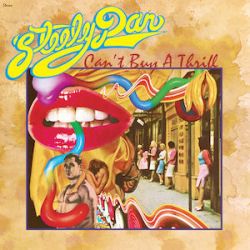
Cover of Steely Dan album, Can't Buy a Thrill. Indescribably ugly.A couple of my colleagues in Frank’s Apa (the music APA that refused to die) are working their way through the spans of their lives, picking an album to write about from each year since their birth. I thought I’d join them, but rather than make it an exercise in autobiography, relating the music to the events of my own life, I’m picking albums and and artists that I’ve never properly listened to: the overlooked, the casually dismissed, the records I’ve been meaning to get around to. Pulling together a list of candidates for the first few years of my life has been ridiculously easy, the seventies a seemingly inexhaustible seam

To start with, 1972: the year of decimalisation, Watergate, and the first Steely Dan album, Can’t Buy a Thrill. Beloved of favoured critics (Ian Penman, Barney Hoskyns), covered by the Minutemen, name pulled from a Burroughs novel…I should have given Steely Dan their due long ago. But the basic proposition of smart, cynical lyrics as the necessary splash of citrus in a slick jazz-rock cocktail didn’t gibe with me. It’s taken years of habituation to the smoother, jazzier sides of John Martyn and Joni Mitchell to suppress my gut aversion to music that sounds that clean.

As album opener, “Do It Again” threatens to eclipse the rest of the record, a perfect stand-alone single to rank with “Good Vibrations”. It’s a song buried deep in the sediment laid down in my memory by ambient exposure to radio during my childhood—only relatively recently did I learn that it was by Steely Dan, or even what it was named. The laidback snap and groove of the Latin rhythm, the lambent pools of electric piano, the title hook in the chorus, the sitar solo…six minutes is not nearly long enough to exhaust the pleasures of this song.

The rest of the album I’m more ambivalent about: for all the craft of the songwriting and the tasteful detail in the arrangements, the overall sound is drenched in the kind of ’70s FM radio syrup that still sets my teeth on edge. The Thin Lizzy–ish gallop of “Reelin’ in the Years” is terrific but I crave even a touch more grain or dirt in the guitars, and the likes of “Fire in the Hole” veer queasily close to Billy Joel.

As so often when you come late to a classic album, part of the interest is in the fresh context it provides for music that followed. I hear echoes in Jim O’Rourke’s Simple Songs, for instance, and in the later albums by Super Furry Animals (obvious, really…wasn’t “The Man Don’t Give a Fuck” originally built around a Steely Dan sample?) Less obviously, Steely Dan remind me of Blue Öyster Cult with their air of being a touch too clever for the game they were playing, and in the cryptic oddity of their lyrics. I don’t hear so much the vaunted cynicism, except at its bluntest in “Only a Fool Would Say That”, but I like the way the lyrics hint at never-to-be-explained back stories. It took me a while to fully appreciate the brilliance of Secret Treaties—perhaps the same will prove true of Can’t Buy a Thrill.

A Great Variety of Morbid Symptoms

Over on Retromania, Simon Reynolds notes a couple more symptoms of this lingering syndrome, before finishing up with this:

But there’s also an impulse to sort through/tie together/make sense of one’s life in loving music/film/books. Winnow down to the essentials and peaks. Create a map of a journey through taste; a consumer-biography. I can’t help sensing a morbid impulse lurking beneath this—almost like getting one’s affairs in order in readiness for death.

I don’t know that it’s growing awareness of the Grim Reaper standing at my shoulder but I’ve certainly been spending the last few years taking stock. I spent my thirties casting the net wide. The creative energy of jungle and post-rock ebbed and, spurred by the eclectic coverage in The Wire, I started to explore the wider world of music. At the same time, the reissue boom driven by compact disc reached its peak—an incredible range of music, from reggae to afrobeat to Ethiopian jazz to drone, was unearthed and put into general circulation. I gorged myself for years.

But eventually I realised that I didn’t care that much about a lot of the music I was listening to. Much of it I had barely listened to—some discs made the player just long enough to make sure that they were working, some I didn’t even listen to while I was ripping them (that Stravinsky box set). I had gone exploring, had gained a sense for the contours of the landscape, but I didn’t have a strong sense for where I wanted to be.

I cut way back, eventually trashing the music library on my computer and exiling all the files to a massive hard drive, and began to rebuild. It seems absurd to say, but after nearly four decades of listening to music, I am still figuring out what it is that I actually like. I haven’t entirely given up the search—I still hold out hope that some day I will hear the album that will unlock the pleasures of Brazilian pop for me—but I buy only a couple of albums a month, spend the rest of the time getting to know better the music I already own.

While I’m on a (blog)roll, my old comrade Ian went to see a clatter of films at the Dublin International Film Festival. For reasons known only to himself he maintains two versions of his blog, one on WordPress, one on Blogger, posting the same content to both. But sure, we all have our little foibles.