
The original incarnation of Loop endured for a scant five years at the tail end of the eighties, achieving their moment of aesthetic perfection with A Gilded Eternity and the “Arc-Lite” single, then splitting. Over the course of three albums, they pared away the extraneous, cutting out the crawling wah-wah guitar solos to leave only riffs like pulsar transmissions. No harmonic development, just drilling, distortion-drenched guitar riffs repeated over circling, tom-heavy rhythms. I can think of few other bands with the same commitment to repetition, to this kind of formal purity — Lungfish, maybe, or Wire in their terse, abrasive early days. Absent the consolations of Spacemen 3’s religiosity, A Gilded Eternity evoked a bleak, post-industrial landscape, blackened and smoke-wreathed.
After the split, Robert Hampson briefly joined Godflesh, playing on half of their third album, Pure (itself a monolithic aesthetic statement), before forming Main, with Loop’s other guitarist, Scott Dawson. Main continued the programme of reduction, quickly dispensing with drums, ultimately with guitars (and Dawson), the music so rarefied and abstracted that Main seemed to vanish into the ether, presence slipping imperceptibly into absence. It’s surprising that the last Main album appeared as late as 2013, less surprising that it appeared on Peter Rehberg’s Editions Mego label, a distance remove from rock and its mythologies. I believe Hampson spent a while leading a hand-to-mouth existence in Paris, working on electro-acoustic composition at GRM.
The return of Loop has been slow and faltering, bursts of activity separated by long periods of silence. A comprehensive reissue campaign around 2008, comprising the three albums with attendant radio sessions and demos, and the three-CD set rounding up non-album tracks. A triumphant headline set at All Tomorrow’s Parties in 2013 that recalled the thrill of the very first gigs I went to as a teenager: Sonic Youth, the Shamen, Dinosaur Jr., My Bloody Valentine, Fugazi…Loop. That all signals jammed feeling, complete sensory overload: the thick fog of dry ice and staccato glare of strobe lights, the brain-capsizing volume and distortion, the suffocating crush of bodies yearning to be closer to the stage. A new EP in 2015, Array 1, notionally the first of a trilogy that was never completed, derailed perhaps by the collapse of the ATP organisation. Scattered live appearances — I caught a lacklustre night at Le Poisson Rouge in New York. In 2022 a new album, Sonancy, released incongruously on Cooking Vinyl, a label linked indelibly in my mind with Michelle Shocked and the Cowboy Junkies. Momentum again halted, this time by Covid, postponing the accompanying tour.
Postponed until last Saturday, at Whelan’s. The usual apprehension about seeing a band you love, long after the fact, the fear of seeing something dismal, embarrassing, that might sour you on them forever. I’m not convinced by Sonancy, the sound too clean, too precise, too light. I’m don’t know whether Loop would welcome the comparison, but it stands in the same relation to A Gilded Eternity as Hawkwind’s late-seventies albums do to Doremi Fasol Latido. Recognisably the same band but lacking the thickness, the heft, that steely-eyed gaze into the infinite.
The venue was half-empty when I arrived, knots of greying men checking each other’s credentials, seeing who was at the gig in McGonagle’s in 1991. Robert invoked the thirty-two year gap since their last visit to Ireland many times throughout the evening. More subtly, the EU flag draped over his amplifier sported only twelve stars, as it did back then. They played a long set, an hour and forty-five minutes — this tour the last run for the older material, he warned. And it was terrific, not a moment too long. The rhythm section (Wayne Maskell and Hugo Morgan from the Heads) were locked in, the guitars were shearing and relentless. Two incredible songs where Robert sculpted feedback into something of unearthly beauty. The new songs sounded more powerful live, the slow-burn set-closer “Aurora” a particular highlight. Against all my expectations, Loop are back. Don’t miss them.
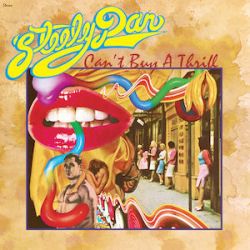 A couple of my colleagues in Frank’s Apa (the music APA that refused to die) are working their way through the spans of their lives, picking an album to write about from each year since their birth. I thought I’d join them, but rather than make it an exercise in autobiography, relating the music to the events of my own life, I’m picking albums and and artists that I’ve never properly listened to: the overlooked, the casually dismissed, the records I’ve been meaning to get around to. Pulling together a list of candidates for the first few years of my life has been ridiculously easy, the seventies a seemingly inexhaustible seam
 Hors Catégorie